
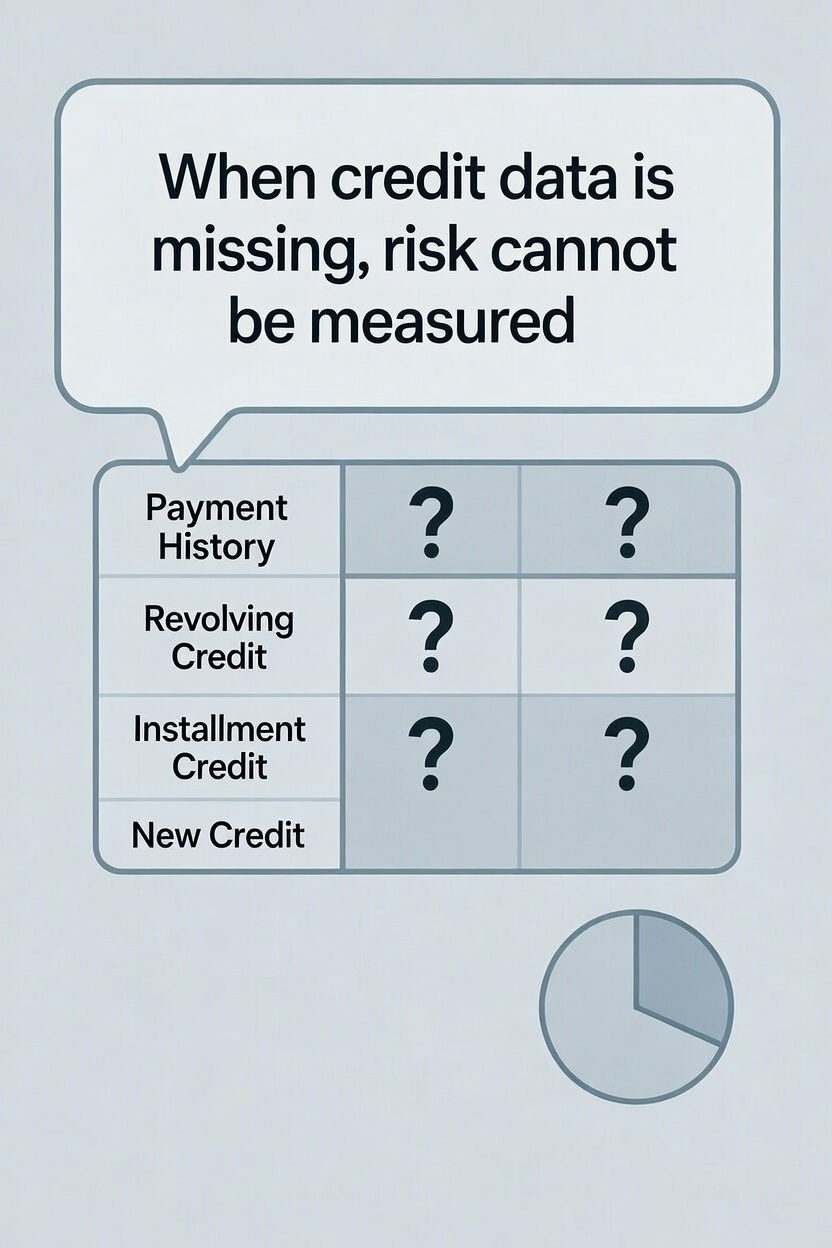

Knowing how credit works before you open your first account saves years of trial and error. Here are the essentials that matter most.
How credit works for beginners is often explained in a way that creates more confusion than clarity.
If you are new to credit, you are likely worried about making a move that quietly harms your future options.
That fear is valid.
Most beginners do not damage their credit because they are irresponsible.
They damage it because they are acting on incomplete or poorly timed information.
This guide is designed to slow you down in the right way.
Not to delay progress, but to protect it.
Instead of overwhelming you with everything credit could involve, we are going to focus on what actually matters early on.
This is about understanding structure, timing, and restraint before you start making moves you cannot undo.
How Credit Works for Beginners When the Real Risk Is Silent Damage
How credit works for beginners is less about opening accounts and more about avoiding early mistakes that do not show up immediately.
Silent damage happens when an action looks harmless today but limits your options later.
Most people never realize when it happens.
Examples include opening accounts too close together.
Applying before your profile is ready.
Chasing a score increase without understanding profile strength.
None of these feel dangerous in the moment.
All of them matter more than beginners are told.
Lenders do not only look at your score.
They evaluate how your credit profile is structured and how recent your activity is.
Understanding this early protects you from decisions that weaken approvals before you ever apply.
How Credit Works for Beginners Beyond Just the Credit Score
How credit works for beginners is often reduced to one number.
That is a mistake.
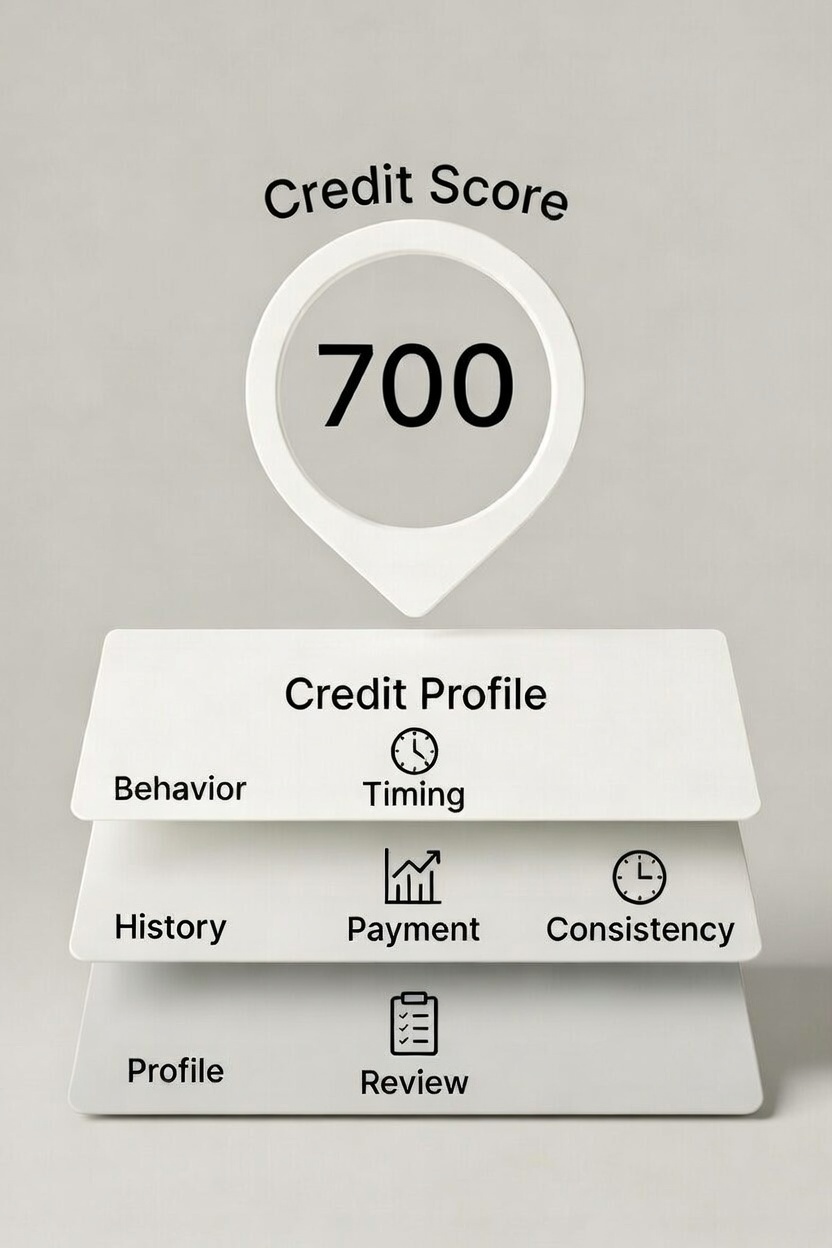
Your score is a summary, not the full story.
Lenders see the details underneath it.
They look at:
- Account age
- Utilization patterns
- Recent inquiries
- Credit mix
- Timing of activity
A beginner with a decent score can still be seen as risky.
A beginner with a lower score but clean structure can sometimes be viewed more favorably.
This is why copying advice focused only on “raising your score” often backfires.
Score movement without structure can lead to denials later.
How Credit Works for Beginners When Timing Matters More Than Action
How credit works for beginners depends heavily on when you do things, not just what you do.
Timing is one of the least explained parts of credit education.
It is also one of the most important.
Applying too early creates unnecessary inquiries.
Opening accounts too quickly compresses your credit age.
Making changes right before a future goal can weaken outcomes.
Credit rewards patience when it is intentional.
Rushing creates friction that stays on your profile longer than most people expect.
If you are not planning a major approval soon, restraint is often the smarter move.
Doing nothing strategically is still progress.
How Credit Works for Beginners Who Want to Build Without Risk
How credit works for beginners should be about building safely, not aggressively.
Early-stage credit is fragile.
Small mistakes carry more weight when your profile is thin.
This is why beginner advice needs filtering.
Not all credit actions are equal at every stage.
Some actions are appropriate later but harmful now.
Others are useful early but become irrelevant over time.
The goal is not to do everything.
The goal is to do only what your current stage can support.
This is where many beginners feel overwhelmed.
Too much advice.
Not enough context.
How Credit Works for Beginners Who Are Trying to Avoid Information Overload
How credit works for beginners becomes confusing when advice is consumed without a framework.
Social media tips are rarely stage-aware.
What worked for someone else may not apply to you yet.
Information overload leads to one of two outcomes.
Over-action or complete paralysis.
Neither helps you.
What you need early on is a simple rule set.
Clear boundaries.
Defined “do” and “do not do” guidance.
That is why many beginners benefit from a filtered approach rather than endless content.
If you want a simple reference that explains what actually matters early and what can wait, the Credit Foundations Guide was created for this exact stage.
You can find it here: https://shop.beacons.ai/renaediazmiller/5284b7aa-485e-47d1-9a11-3c8d2e34dbe2
It is designed to help beginners understand credit without triggering silent damage through premature action.
How Credit Works for Beginners When Lenders Evaluate Risk
How credit works for beginners makes more sense when you understand how lenders think.
Lenders are not looking for perfection.
They are looking for predictability.
A clean, boring profile often performs better than an active, chaotic one.
Consistency matters more than cleverness.
Recent behavior is weighted heavily.
So is stability over time.
This is why waiting can improve outcomes.
And why restraint is not the same as stagnation.
How Credit Works for Beginners Who Want to Protect Future Approvals
How credit works for beginners should always be tied to future goals.
Even if you are not applying for anything now, your actions still matter.
They shape what will be possible later.
Good positioning keeps doors open.
Poor positioning quietly closes them.
The goal is not to rush approvals.
The goal is to preserve strong options.
When you understand this early, credit stops feeling stressful.
It becomes manageable.
How Credit Works for Beginners: A Grounded Way Forward
How credit works for beginners does not need to feel overwhelming or urgent.
You do not need to master everything.
You need to avoid the few things that cause lasting damage.
Clarity beats speed.
Preparation beats reaction.
If you slow down now, you protect yourself later.
That is how credit works for beginners.
Official sources: CFPB: What are credit scores? · FTC: Understanding your credit · CFPB: Ways to start or rebuild a good credit history
Keep reading
- Start here: Credit Basics Guide
- How to Build Credit for Approval Readiness: 7 Profile Factors Beginners Miss
- Building Credit on a Budget: What Starter Accounts Can and Cannot Do
- Why Having No Credit Is Risky (And What Most People Don’t Realize)
- Credit Score vs Credit Profile and the Approval Factors Most People Miss
Educational content only, not financial, legal or credit repair advice. WealthShift doesn’t guarantee any credit score, credit limit or approval outcome. Examples use round numbers for illustration.

How credit works: FAQ
How credit works in one sentence?
Lenders report how you borrow and repay to credit bureaus, and scoring models turn that report into a score other lenders use to judge risk.
Does checking my own credit hurt?
No. Checking your own report or score is a soft inquiry and does not affect your score.
How credit works for someone with no history?
With no reported accounts, most models cannot produce a score. A secured card, credit-builder loan or authorized user account can start your file.
Is how credit works the same at every lender?
The reports and scores are similar, but each lender sets its own approval rules, so outcomes can differ.

Leave a Reply