
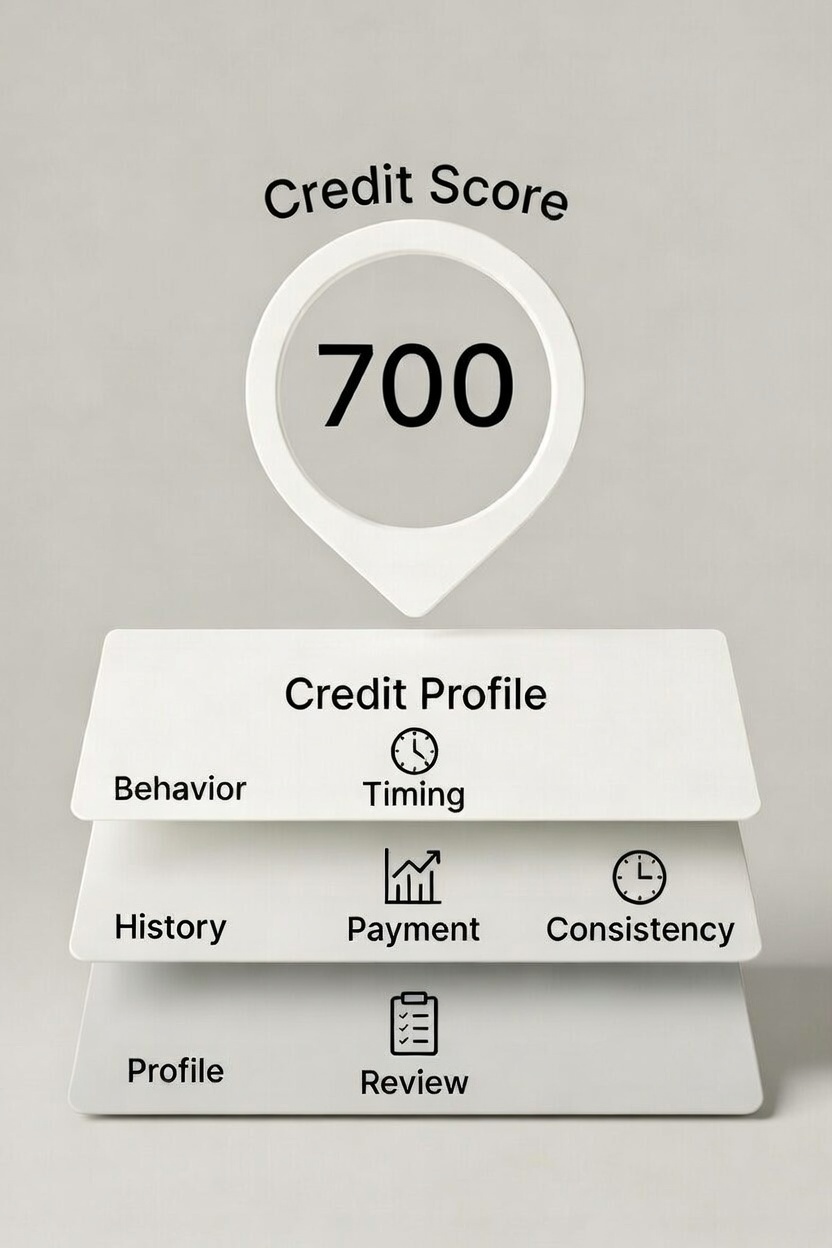

Understanding what lenders look at before approving an application helps you prepare the right documents and fix weak spots first.
What lenders look at before approving goes beyond the credit score you see in an app. A lender wants to know whether you can repay the specific debt you are requesting. That answer can change by product: mortgages, business loans and credit cards are not all underwritten the same way. If you have good credit and still receive a denial or low limit, the question is which part of the application did not meet that lender’s requirements?
What lenders look at before approving is not a mystery, but it is often misunderstood.
If you have ever thought, “My credit is good, so I should be fine,” you are not alone.
Many people do the basics right and still end up with weak approvals, higher rates, or limits that do not support their goals.
That disconnect usually comes from not understanding how lenders actually evaluate risk before they say yes.
This matters whether you are applying for a mortgage, business funding, a bank loan, or a credit card.
Approval strength is determined long before you submit an application.

What lenders look at before approving starts with your credit profile
What lenders look at before approving almost always begins with your credit profile.
Your credit report tells lenders how you have handled borrowed money over time.
It also signals how risky it may be to extend you more credit right now.
Lenders do not look at your score alone.
They look at how that score was created and how stable it appears.
High scores with volatility can be treated differently than slightly lower scores with strong structure.
Key areas lenders focus on include payment history, utilization, account age, and recent activity.
Late payments, collections, or charge-offs raise immediate concerns.
High utilization can signal financial strain even if you pay on time.
Recent inquiries or new accounts can increase perceived risk during sensitive approval windows.
A credit profile that looks calm and controlled is often more valuable than one that looks aggressive.
This is why people with “good credit” still receive weak approvals.
The structure matters as much as the number.
What lenders look at before approving includes your bank statements

What lenders look at before approving does not stop at your credit report.
Bank statements are often used to verify what your application claims and to assess financial behavior.
Lenders typically review several months of statements.
They want to see consistency, predictability, and alignment with your stated income.
They are also trained to spot patterns that suggest instability.
Common bank statement red flags include overdrafts, frequent negative balances, and NSF fees.
Large unexplained deposits can trigger questions or additional documentation requests.
Heavy transfers between multiple accounts can raise concerns about cash flow clarity.
Spending patterns that conflict with reported income may cause delays or declines.
Many applicants underestimate how much bank behavior influences approvals.
Even strong credit profiles can be weakened by messy statements.
Clean statements reduce friction and help approvals move faster.
What lenders look at before approving depends on how you earn income
What lenders look at before approving changes depending on whether you are an employee or self-employed.
Income type plays a major role in how risk is assessed.
What lenders look at before approving when you are an employee
What lenders look at before approving for W-2 employees is usually simplicity and stability.
Steady income that is easy to verify is viewed as lower risk.
Lenders typically request recent pay stubs and W-2s from the last one to two years.
They may also verify employment directly with your employer.
Consistent hours and predictable base pay strengthen your profile.
Overtime, bonuses, and commission may be counted if there is a stable history.
Frequent job changes or recent employment gaps can raise concerns.
Timing matters, and changes close to an application can weaken approval strength.
What lenders look at before approving when you are self-employed
What lenders look at before approving is more detailed for self-employed borrowers.
Income that fluctuates requires deeper verification.
Lenders often review personal and business tax returns for the last two years.
They may also request profit and loss statements and balance sheets.
Business bank statements are used to confirm real cash flow.
One of the biggest challenges for self-employed applicants is write-offs.
While deductions can lower taxes, they can also reduce qualifying income.
Lenders focus on net income and trends over time, not just gross revenue.
Self-employment is not a disadvantage, but it requires preparation.
Unclear documentation or declining income trends can weaken approvals quickly.
What lenders look at before approving includes your tax returns
What lenders look at before approving often includes tax returns, especially for larger loans.
Tax returns help lenders confirm income consistency and long-term stability.
They compare reported income to bank statements and application details.
Discrepancies can trigger additional questions or delays.
Rising income trends are viewed more favorably than declining ones.
For business owners, Schedule C forms, K-1s, or business returns may be reviewed.
Lenders want to see that income is sustainable and not dependent on a single short-term spike.
Clean, consistent tax documentation strengthens trust.
What lenders look at before approving is also about timing and recent activity
What lenders look at before approving is heavily influenced by timing.
Recent actions can matter more than older history.
Paying balances down is positive, but applying before reports update can backfire.
Opening new accounts can reduce approval odds during certain windows.
Stacking applications too closely together increases perceived risk.
Each lender has its own sensitivity to recent activity.
Applying in the wrong order can permanently limit options.
This is why timing discipline is a core part of strong approval positioning.
What lenders look at before approving includes the credibility of your application
What lenders look at before approving goes beyond numbers.
Lenders assess whether your application tells a consistent and believable story.
Documentation should match across credit reports, bank statements, and tax returns.
Missing paperwork or contradictions can delay decisions.
Clear explanations for past challenges can reduce concern.
Approvals are not emotional decisions.
They are data-driven assessments of risk and confidence.
The cleaner the story, the stronger the outcome.
What lenders look at before approving and how to check your readiness
What lenders look at before approving is easier to manage when you know where you stand.
Many people apply without realizing what lenders would flag immediately.
That is why tools like Approval Readiness Check: What Lenders Would Flag Today exist.
It helps you see how your profile may be viewed right now.
It highlights areas that could weaken approvals before you apply.
This kind of clarity allows you to slow down and make informed decisions.
It also helps you avoid learning the hard way.
What lenders look at before approving and what to do next
What lenders look at before approving should inform your timing, not pressure you into action.
Strong approvals come from preparation, not urgency.
Before applying, review your credit profile, income documentation, and bank statements.
Confirm that recent activity supports your goal rather than undermines it.
Decide whether you are positioned for strength or whether waiting protects your outcome.
Applying once and applying strong is rarely accidental.
It is the result of understanding what lenders look at before approving.
This is how you protect your leverage and make your next application count with what lenders look at before approving.
Official sources: FTC: Understanding your credit · CFPB: What are credit scores? · SCORE: Documents you need when applying for a loan
Keep reading
- Start here: Credit Basics Guide
- Why Am I Still Getting Denied? Here’s What Lenders Are Actually Looking At Beyond Your Credit Score
- Good Credit, Still Denied? Here’s What Lenders Are Actually Looking At
- Credit Score vs Credit Profile and the Approval Factors Most People Miss
- Business Funding Readiness: A 7-Step Checklist Before You Apply for Financing
Educational content only, not financial, legal or credit repair advice. WealthShift doesn’t guarantee any credit score, credit limit or approval outcome. Examples use round numbers for illustration.
Updated research and related reading
2026 update: A mortgage, business loan and credit card are not identical applications
For a mortgage, lenders typically examine verified income, existing debts, assets, credit history and the property. Mortgage program rules and documentation differ. For a business loan, lenders may focus on business cash flow, debt service, time in operation, owner guarantees and collateral. For a credit card, income, repayment obligations, prior credit use and issuer-specific policy may matter. A universal ‘700 score approval rule’ does not exist. Read CFPB mortgage terminology and the CFPB’s explanation of reports and scores.
If your application is denied, start with the actual reasons
For consumer credit, creditors must provide the principal reasons for adverse action or information about obtaining them. Business-credit notification rules depend on the type of transaction and applicant; Regulation B §1002.9 is the official source. Do not assume a missed lender requirement can be solved by opening more accounts. See our thin-file approval analysis, score-versus-profile explanation and business DSCR example.
A plain-English checklist for the next application
- Identify the actual financing product and the amount needed.
- Review the correct reports and any specific denial reasons.
- Reconcile debts, income, and business cash flow with your documents.
- Check the lender’s current eligibility and guarantee requirements.
- Apply when the specific problem has been addressed—not just when a score changes.
CFPB: What to do after a credit-report-related denial explains consumer rights and next steps. For business financing preparation, use the business loan document checklist.

What lenders look at: FAQ
What lenders look at first?
Most start with credit history and score, then verify income, existing debt and, for business loans, cash flow and time in business.
Is what lenders look at different for mortgages?
Mortgage lenders also review the property, down payment, reserves and debt-to-income ratio in detail.
Does what lenders look at include bank statements?
Often, yes, especially for self-employed borrowers and small business loans.
How can I prepare for what lenders look at?
Pull your credit reports, organize tax returns and statements, and pay down revolving balances before applying.

Leave a Reply