
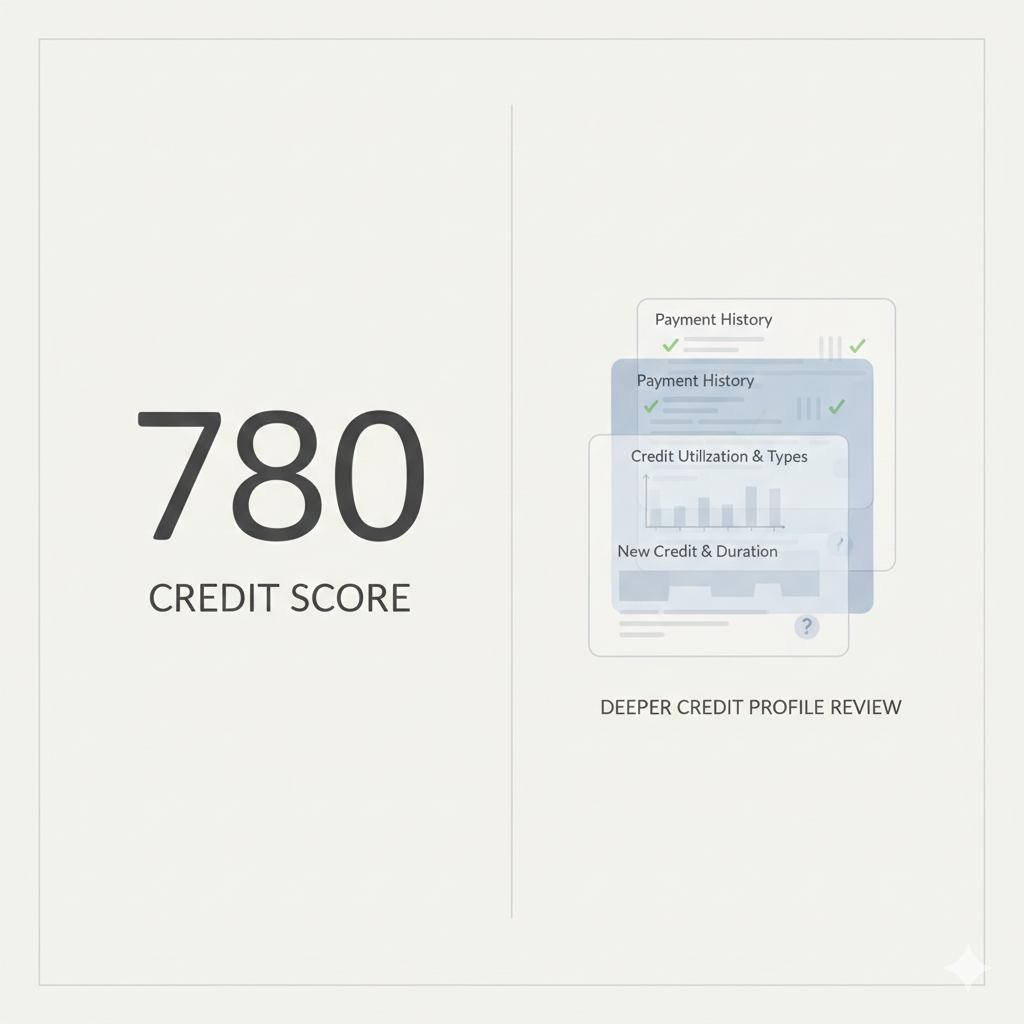
Good credit, still denied? Start with the lender’s adverse action notice. It gives the main reasons for the denial or tells you how to ask for them. If the lender used a different score or report than the one you checked, compare what the notice lists before deciding what to fix. See the CFPB guide to credit denials and our guide to what to do after a denial.
Why good credit scores still get denied is one of the most frustrating credit experiences, especially when everything looks fine on the surface.
Good Credit, Still Denied? What to Check First
You check your score.
It’s solid.
You apply anyway.
And the answer comes back as a denial, or a tiny limit, or a quiet “not at this time.”
That moment feels confusing because it doesn’t match the story you’ve been told.
Good credit is supposed to mean access.
It’s supposed to mean approval.
So when that doesn’t happen, most people assume something is wrong.
Either with the lender.
Or with their report.
But most of the time, that denial isn’t random.

The Credit Score Isn’t the Decision
Here’s the first thing that needs to be clear.
A credit score is a screening signal, not an approval decision.
It helps lenders quickly sort applications.
It does not, by itself, determine whether you get approved.
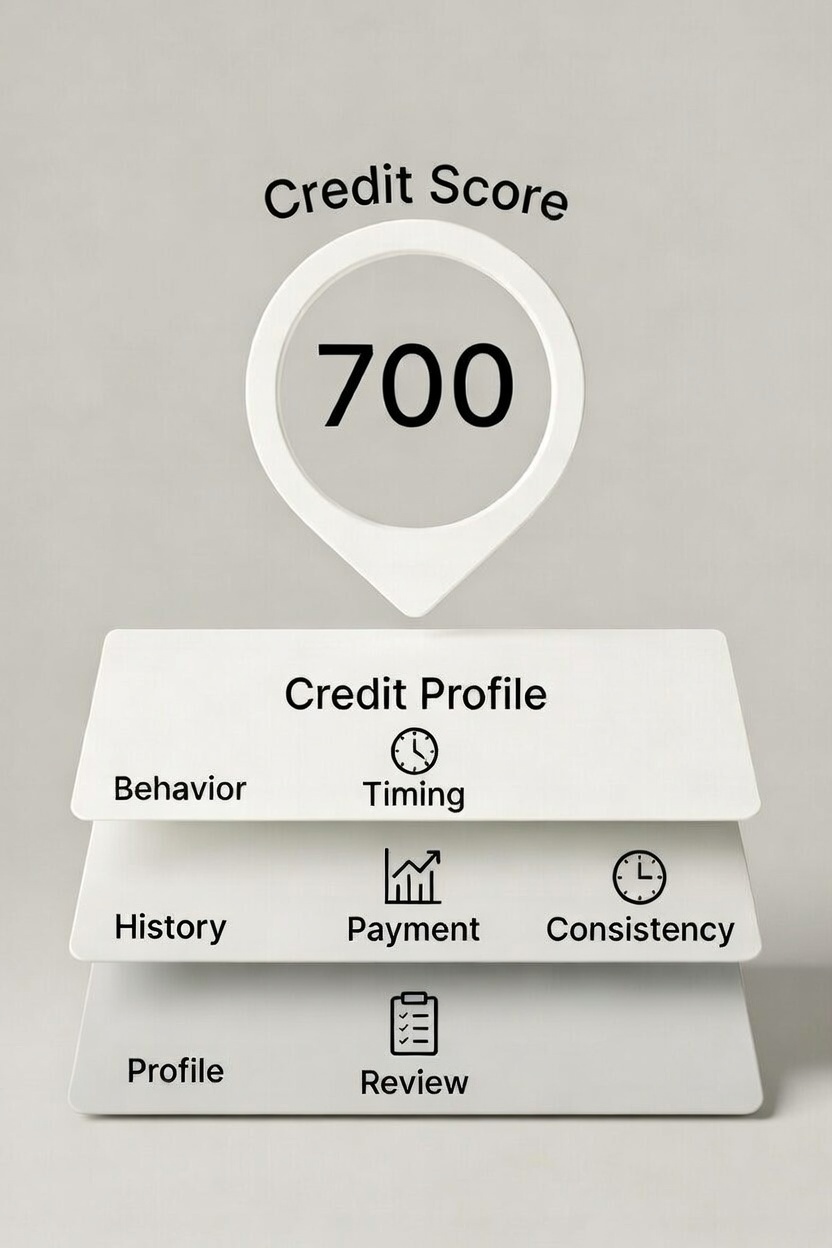
Approvals are based on your credit profile, not just the score attached to it.
That profile includes how your accounts behave, how recently they’ve been used, and how predictable your repayment patterns look right now.
This is why two people with similar scores can get completely different outcomes.
The score opens the door.
The profile decides what happens next.
If this distinction feels subtle, that’s because most people are taught to think in scores instead of structure.
That difference is explored more deeply in Credit Score vs Credit Profile and the Approval Factors Most People Miss, where the gap between scoring and approvals becomes clearer.

How Lenders Actually Evaluate Credit Profiles
Credit decisions happen in layers.
Early reviews look at surface-level information.
That’s where the score matters most.
Final reviews look deeper at the credit profile itself.
This is where timing, structure, and recent behavior start to matter more than people expect.
Lenders do look at history.
Often 12 months.
Sometimes 24 months.
But they’re not just asking, “Have you ever paid on time?”
They’re asking, “What has this profile been signaling recently?”
A profile can have years of clean history and still raise concerns if recent activity doesn’t align with the type of approval being requested.
Utilization shifts.
New inquiries.
Inactivity.
Sudden changes.
All of that affects how the profile is read in the present moment.
So while your overall history matters, recent behavior carries more weight when a decision is being made.
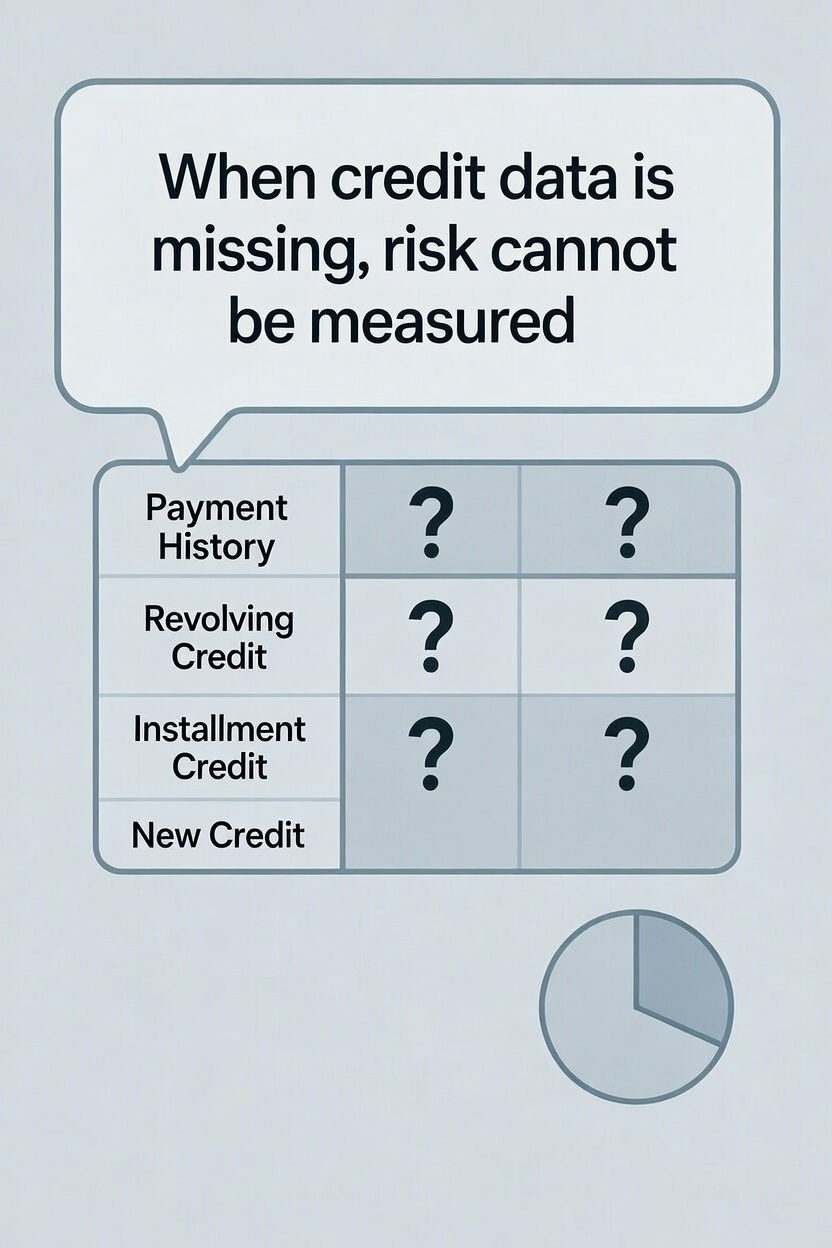
This is also why borrowers with limited depth often struggle here, even when their scores look fine.
That dynamic is broken down further in How Thin Credit Files Affect Approvals, where visibility and depth become the deciding factor.

Why “Good Credit” Can Still Be Misaligned
This is where most confusion lives.
Good credit doesn’t automatically mean approval-ready credit.
It means the profile has avoided major problems.
Approval-ready credit means the profile is aligned with the decision being made at that time.
A few common assumptions tend to blur that difference:
A good score means I’m ready to apply
Long gaps between applications always help
Low balances automatically reduce risk
A pre-approval means the hard part is over
None of these ideas are reckless.
They’re just incomplete.
Most people don’t get denied because they did something wrong.
They get denied because their credit profile isn’t positioned for that specific decision, at that specific moment.
Approvals Are About Alignment, Not Just Credit Quality
This is the reframe that changes everything.
Lenders aren’t approving people.
They’re approving patterns inside a credit profile.
Those patterns include repayment history, yes.
But also consistency.
Structure.
Recent activity.
And how predictable the profile looks under current conditions.
That’s why a strong score with misaligned timing can still struggle.
It’s also why a profile with a slightly lower score but clearer recent patterns can sometimes move forward more easily.
This isn’t about chasing perfection.
It’s about understanding how credit profiles are evaluated in real time.
When structure, timing, and utilization line up, approvals feel smoother.
When they don’t, the score alone can’t carry the application.

Why This Feels Random (Even When It Isn’t)
From the outside, denials can feel inconsistent.
You hear stories of people with “worse” credit getting approved.
You see mixed reviews everywhere.
What’s actually happening is variation in profile alignment.
Different lenders.
Different risk tolerances.
Different moments.
The system isn’t judging character.
It’s reacting to signals.
Once you understand that, the experience stops feeling personal.
And it becomes easier to pause instead of pushing forward blindly.
What to Think About Before Applying Again
The takeaway isn’t to stop using credit.
And it isn’t to apply everywhere until something sticks.
It’s to slow down and look at your credit profile as a whole, not just the score attached to it.
Understanding why good credit scores still get denied helps you shift from reacting to preparing.
From guessing to positioning.
That same mindset is especially important for people who are early in their credit journey or who avoided credit altogether, which is explored further in Why Having No Credit Is Risky (And What Most People Don’t Realize).
That’s how credit decisions stop feeling unpredictable.
And that’s how approvals become easier to anticipate.
Good credit getting denied isn’t a contradiction.
It’s usually a signal that the credit profile and the moment don’t match yet.
And understanding why good credit scores still get denied is what allows you to position your credit profile with clarity instead of confusion.
Official sources: FTC: Understanding your credit · CFPB: What are credit scores? · FTC: Free credit reports
Keep reading
- Start here: Credit Basics Guide
- Good Credit But Denied? Why It Happens and What You Can Do Next
- Why Am I Still Getting Denied? Here’s What Lenders Are Actually Looking At Beyond Your Credit Score
- Credit Score vs Credit Profile and the Approval Factors Most People Miss
- What Lenders Look At Before Approving Applications for Mortgages, Business Funding, and Credit Cards — How Banks Really Decide Who Gets a Yes
Educational content only, not financial, legal or credit repair advice. WealthShift doesn’t guarantee any credit score, credit limit or approval outcome. Examples use round numbers for illustration.
First-denial checklist and official reading
Read the CFPB explanation of denials and compare your file with the stated reasons. For limited credit history, see how thin files affect approvals. Don’t confuse the score you see with a lender’s complete underwriting criteria.

Leave a Reply