
Is a low credit limit bad? A low limit can work fine for small purchases you can pay off. The main downside is how quickly a balance uses up the limit. A reported $150 balance uses 30% of a $500 limit and 15% of a $1,000 limit. The same spending leaves you with less room on the smaller card. See the CFPB guide to understanding your credit score.
You may have expected a decent credit limit.
Then the lender gave you $300, $500, or $1,000.
Now you are wondering if that means something is wrong.
The answer is: not always.
A low credit limit is not automatically bad.
Sometimes it is just a starting point.
Sometimes it is a lender test.
Sometimes it is a sign that your profile needs more depth, better timing, lower balances, or more lender trust.
The key is not only looking at the limit.
The key is understanding why the lender may have started you there.
Is a Low Credit Limit Bad for Everyday Use?
A low credit limit can still help if you manage it carefully.
It can help you build payment history.
It can help you show responsible account behavior.
It can help you start a relationship with that lender.
It can also give you a chance to prove that you can handle credit without overusing it.
The problem is that a low limit gives you less room.
If your limit is $500, using $250 already puts you at 50% utilization.
If your limit is $300, using $150 also puts you at 50% utilization.
So the limit itself may not be bad.
But how the balance reports can create problems.
That is why low-limit cards need to be managed with more care.
A Low Limit May Be a Starting Point
Some lenders start borrowers with low limits because they want to see account behavior first.
They may not be rejecting you.
They may simply be limiting how much risk they take at the beginning.
This can happen when your profile is new, thin, recently active, or missing proof of higher-limit management.
The lender may want to see if you pay on time.
They may want to see if you keep balances controlled.
They may want to see if your profile stays stable.
If you manage the account well, the low limit may become part of your credit-building process.
It does not guarantee a future increase.
But it gives you a chance to build trust.
If you keep getting low limits even with a decent score, read the full breakdown on Why Do I Keep Getting a Low Credit Limit With Good Credit?.
A Low Limit Can Become a Problem If Utilization Gets High
The biggest issue with a low credit limit is utilization.
Utilization is how much of your available credit is being used.
When the limit is small, utilization rises quickly.
That matters because reported balances can affect how your profile looks.
You may pay the card on time every month.
But if a high balance reports, lenders may still see risk.
For example, a $240 balance on a $300 limit is 80% utilization.
A $400 balance on a $500 limit is also 80% utilization.
That can make your profile look stretched.
This is why low limits require careful balance management.
A low limit can help, but only if it is not constantly reporting high.
Before you apply again, download the free guide: Good Credit… So Why Are You Getting Denied or Low Limits?
It will help you review what lenders may be seeing beyond your score, including utilization, income, debt, recent applications, account history, and overall profile strength.
Repeated Low Limits May Signal a Profile Issue
One low limit may not mean much.
But repeated low limits are worth paying attention to.
If multiple banks keep approving you around $300, $500, or $1,000, your profile may be sending the same signal to different lenders.
That signal could be:
- high utilization, low current limits, thin credit history, recent applications, income and debt concerns, limited primary tradelines, negative items, or not enough account age.
That does not mean your score is useless.
It means the score is not explaining the whole picture.
Your score may look fine, but the full profile may not support stronger limits yet.
This is where you need to slow down and review the pattern.
Do not keep applying just because the last approval was low.
That can create more inquiries and still not fix the reason the limits are coming in low.
A Low Limit Does Not Always Mean the Lender Dislikes You
A low limit can feel personal, but it usually is not.
Lenders use risk models, internal policies, and profile review standards.
They are not simply deciding whether they “like” you.
They are deciding how much risk they are comfortable taking.
You may be approved because they see enough to give you a chance.
But the limit may be low because they do not see enough to trust you with more yet.
That is an important difference.
A low approval can mean:
“We are approving you, but we are starting cautiously.”
That is different from a denial.
And if you understand that, you can respond more strategically.
A Low Limit May Mean You Need More Primary History
A low limit may also show that your profile needs more primary account history.
Primary accounts are accounts in your own name where you are responsible for repayment.
Lenders often want to see how you manage credit directly.
If your profile depends heavily on authorized user accounts, the score may look better than the lender’s comfort level.
Authorized user accounts may help in some situations, but they may not prove the same level of responsibility as primary tradelines.
If your own accounts are new, limited, or low-limit, the lender may start you lower.
That gives them time to see your behavior.
A Low Limit May Be Connected to Income and Debt
Income and debt can also affect credit limits.
Your income helps show ability to repay.
Your debt shows what obligations you already carry.
If your debt looks high compared to your income, the lender may approve you for a lower limit.
This can happen even if your score is good.
The lender may believe you are reliable but still not comfortable giving you too much available credit.
That is why credit limits are not only about payment history.
They are also about capacity.
Capacity means whether your profile appears able to handle additional credit.
A Low Limit May Be Connected to Timing
Timing can also affect your approval.
If you recently opened new accounts, applied for several cards, or had profile changes, the lender may start you lower.
Recent activity can make the profile look unstable.
The lender may want to wait and see how those changes settle.
This is why applying too often can backfire.
You may get approved, but not with the limit you wanted.
Sometimes the better move is to wait until your profile looks more stable.
Should You Keep a Low-Limit Card?
In many cases, keeping a low-limit card can make sense if it has no expensive fees and you can manage it responsibly.
It can help build history.
It can help show consistent payments.
It can give you a relationship with that lender.
But if the card has high fees, poor terms, or does not fit your goals, then you may need to think carefully.
The goal is not to collect accounts just because they exist.
The goal is to build a profile that supports where you are trying to go.
If a low-limit card helps you build positive history without costing too much, it may be useful.
If it creates fees, stress, or high utilization, it may not be worth it.
What To Review Before Applying Again
Before applying again, review the reason the limit may have been low.
Look at your reported balances.
Look at your current limits.
Look at your recent inquiries.
Look at your account age.
Look at your primary tradelines.
Look at your income and debt.
Look at any negative items that may still be reporting.
Look at whether your profile has enough depth to support the limit you want.
If your score looks good but your approvals keep coming in low, do not guess your next move.
Download the free guide and review the factors that may be affecting your profile before you apply again.
Quick FAQ About Low Credit Limits
Is a low credit limit bad?
A low credit limit is not automatically bad.
It can be a starting point, especially if you manage it well.
But repeated low limits may be a sign that your credit profile needs review.
Is a $300 credit limit bad?
A $300 credit limit is low, but it can still help if used carefully.
Because the limit is small, even a small balance can create high utilization if it reports.
Is a $500 credit limit bad?
A $500 credit limit is low, but it is not automatically bad.
It may be a lender test or a starting point.
If several lenders keep approving you for $500, that may be a sign to review your profile before applying again.
Does a low credit limit hurt your score?
A low credit limit can affect your score if it causes high utilization.
The limit itself is not always the issue.
The reported balance compared to the limit is what can create pressure.
Should I ask for a higher limit right away?
Not always.
It may be better to wait until your profile supports the request.
Review utilization, recent applications, account age, payment history, income, debt, and lender rules first.
Final Thoughts
A low credit limit is not automatically bad.
It can be a starting point, a trust test, or a lender’s way of controlling risk.
But if low limits keep happening, you should pay attention to the pattern.
Your score may look good, but your full profile may still need stronger positioning.
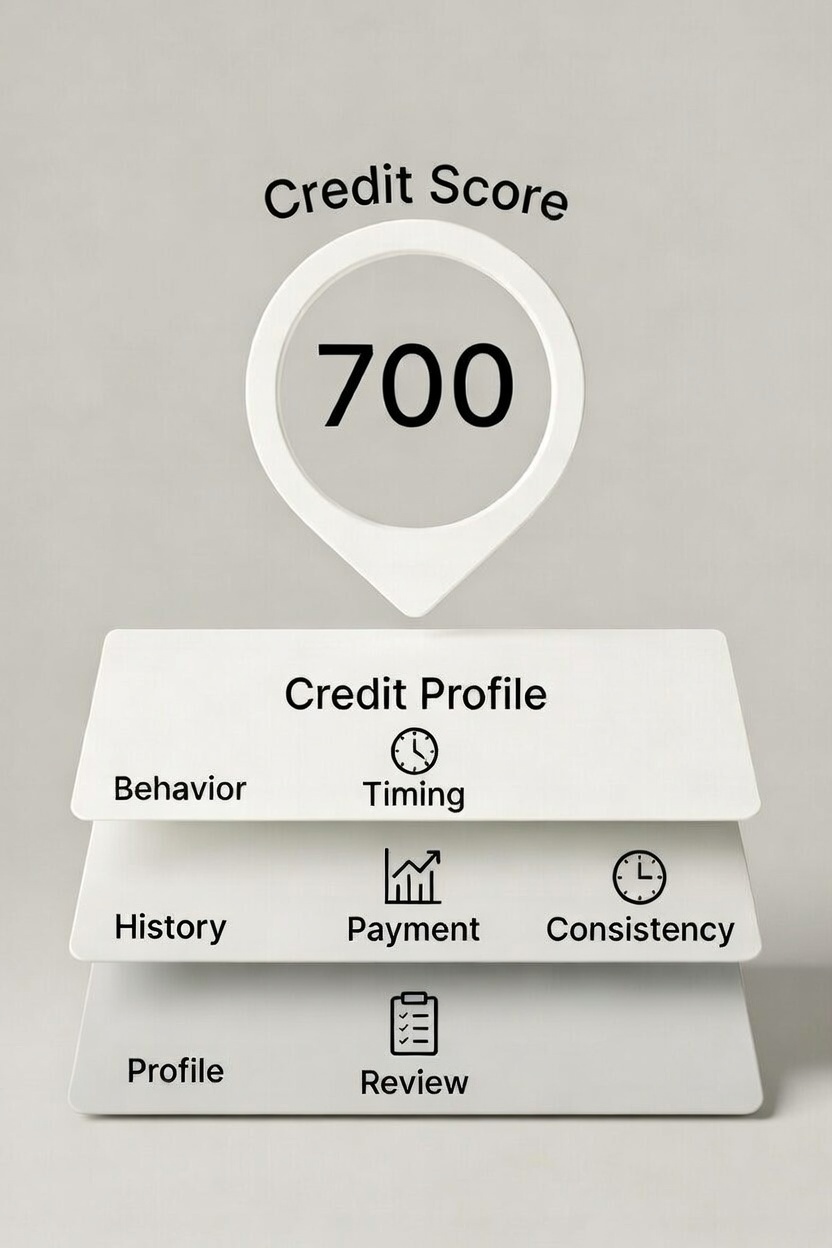
If you want help understanding what your credit profile may be saying before your next move, you can request a Credit Profile Review.
This is not about applying randomly or chasing higher limits.
It is about reviewing your profile before you make another decision.
Was this helpful?
Leave a comment or send a message with what you want explained next: low limits, utilization, lender trust, or when to request an increase.
Understanding whether a low credit limit is bad starts with looking at the full profile, not just the number.
Official sources: CFPB: Know Before You Owe, credit cards · CFPB: What are credit scores?
Keep reading
- Start here: Credit Basics Guide
- Why Do I Keep Getting a Low Credit Limit With Good Credit?
- Why Banks Start You With a Low Credit Limit
- What a $500 Credit Limit Actually Means
- That $500 credit limit isn’t the problem
Educational content only, not financial, legal or credit repair advice. WealthShift doesn’t guarantee any credit score, credit limit or approval outcome. Examples use round numbers for illustration.

Leave a Reply