
“My score is good, so why is my credit limit still low?” That’s one of the most common questions people ask after an approval. Here’s the short answer: your score is only one input. The card issuer has to consider your income or assets and your current debts to judge whether you can make the minimum payments, and it can also weigh your credit history and its own rules. See the CFPB’s Regulation Z ability-to-pay rule.
You may have a good credit score and still get approved for only $300, $500, or $1,000.
That can feel frustrating because, in your mind, the score should have done more for you.
You may be thinking, “My score is good, so why is my limit still low?”
The answer is usually not just one thing.
A credit score matters, but it is not the full decision.
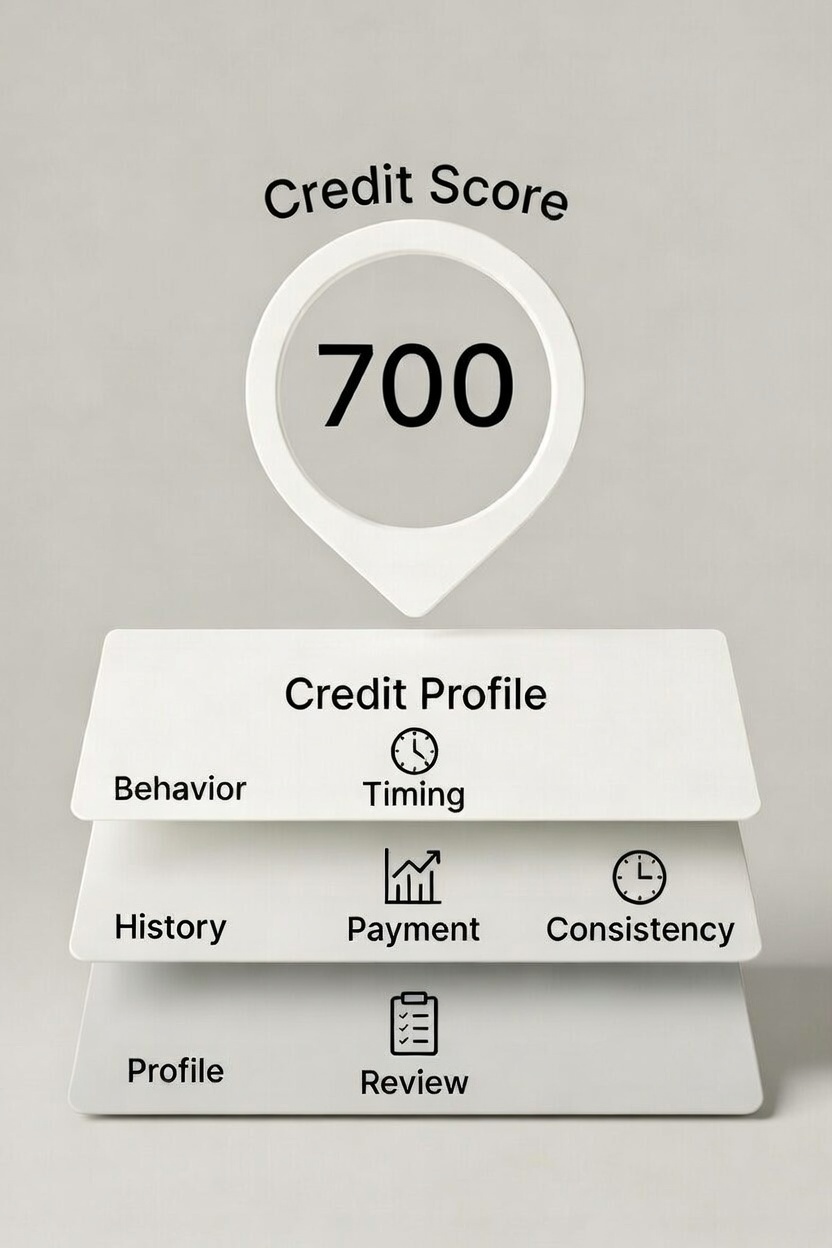
Your score is a snapshot.
Your full credit profile tells the deeper story.
That is why two people can have similar scores and still receive completely different credit limits.
For example, one person on a public credit forum said they got approved for several cards on the same day. Most came back at $5,000 to $10,000, and one came back at $500. Other members pointed to income and that issuer’s own approach as the likely reasons. Same score, same day, different credit limit. That’s lender logic, not a mistake on your report.
One person may have a stronger profile, deeper account history, lower balances, fewer recent applications, and better comparable tradelines.
Another person may have a good score, but the profile underneath may still look thin, unstable, or risky to the lender.
This is why you have to look beyond the number.
In this post
What Can Explain a Low Credit Limit With Good Credit?
A good score can help you get considered, but it does not automatically guarantee a high limit.
Lenders are not only asking, “What is your score?”
They are also asking, “How much risk does this profile show?”
That is where many people get surprised.
You may see a good score, but the lender may see high balances, short account history, recent inquiries, low current limits, or not enough proof that you can manage a larger credit line.
This does not always mean you have bad credit.
It may mean the lender is not fully comfortable yet.
A low starting limit can be the lender’s way of limiting their risk while they watch how you manage the account.
To understand this better, it helps to learn The credit score isn’t the whole story.
Before you apply again, download the free guide: Good Credit… So Why Are You Getting Denied or Low Limits?
It will help you review what lenders may be seeing beyond your score, including utilization, income, debt, recent applications, account history, and overall profile strength.
Lenders May Be Looking at Your Full Risk Profile
When a lender reviews you, they may look at your full risk profile.
That means they are looking at the overall picture, not just the score.
A simple way to understand this is through the Four C’s and Five C’s of credit.
The Four C’s usually include character, capacity, capital, and collateral.
The Five C’s often add conditions, which can include the timing, environment, or type of credit request.
For credit cards and personal credit limits, the lender may look at things like:
- payment history, income, debt, utilization, account age, recent applications, current limits, comparable tradelines, primary tradelines, negative items, and overall stability.
That is a lot more than just a three-digit score.
This is why someone with a lower score can sometimes receive a better approval than someone with a higher score.
The lower-score person may have a deeper profile, stronger income, lower debt, older accounts, or better history managing larger limits.
The higher-score person may have less depth behind the number.
That is why lender logic matters.
Your Current Limits May Be Setting Expectations
Your current credit limits can affect what a new lender feels comfortable giving you.
This is where comparable tradelines matter.
Comparable tradelines are accounts that show what kind of credit limits you have already managed.
If your current cards are reporting $300, $500, or $1,000 limits, a new lender may not have much proof that you can manage a much higher limit yet.
That does not mean you can never get a higher limit.
It means the lender may want to see more history before giving you a larger line.
For example, if your highest current limit is $500, asking a new lender to trust you with $10,000 may be a bigger jump than they are ready to take.
The lender may start you lower and wait to see how you manage the account.
This is why current limits matter.
They can create a reference point.
If you want to understand this more, read What Comparable Tradelines Mean for Credit Limits.
High Utilization Can Make Your Profile Look Riskier
Utilization is one of the biggest reasons a good score may not lead to the limit you expected.
Utilization means how much of your available credit is being used.
If your balances report high, lenders may see that as a risk signal.
You might pay on time every month, but if your reported balances are high when the lender checks, the profile can still look stretched.
For example, using $450 on a $500 card reports as 90% utilization.
That can make the lender wonder if you are already relying too heavily on available credit.
A good score does not erase what your current balances are saying.
This is why timing matters too.
You may pay your card down after the statement closes, but the lender may still see the balance that was reported.
Before applying again, it helps to know what your cards are reporting and whether your utilization is making your profile look riskier than it really is.
Read Do you actually understand credit utilization? for a deeper breakdown.
Recent Applications Can Lower Lender Confidence
Recent applications can also affect your starting limit.
If you have several hard inquiries or new accounts, the lender may think you are looking for too much credit too quickly.
Even if your score is still decent, that behavior can raise questions.
The lender may wonder why you are applying often.
They may wonder if you are about to take on more debt.
They may wonder if your profile is changing too fast.
That does not mean one inquiry ruins everything.
It means too much recent activity can make the lender more cautious.
Sometimes the better move is to pause, let your profile settle, and apply when the timing makes more sense.
Your Profile May Be Thin or Too New
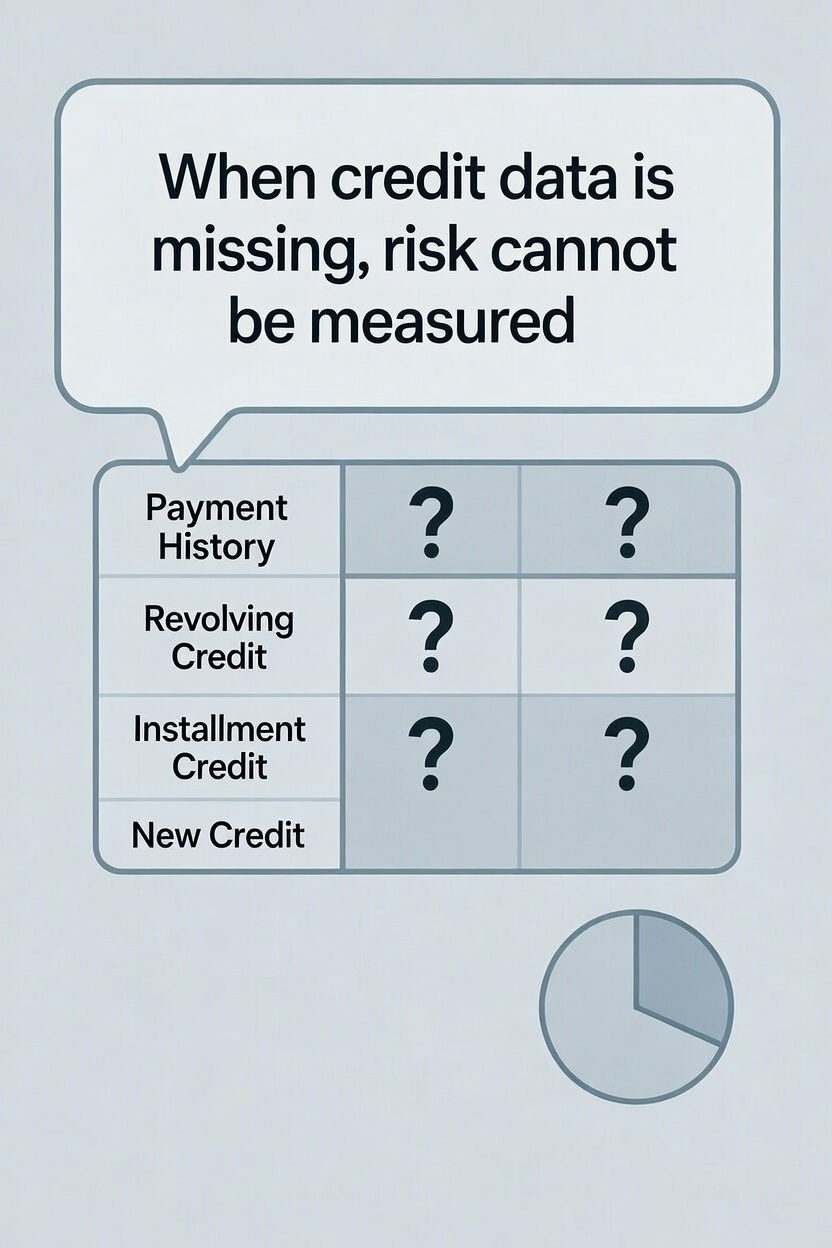
A good score on a thin profile can be misleading.
A thin profile means there may not be enough history behind the score.
You may have a good number, but not enough accounts, not enough age, or not enough proof that you can manage credit in your own name.
This matters because lenders want to see patterns.
They want to see how you handle accounts over time.
They want to see whether you pay consistently, keep balances controlled, and manage different limits responsibly.
Authorized user accounts may help, but they may not carry the same weight as primary tradelines in your own name.
Primary tradelines show that you are responsible for the account.
That can build more lender confidence over time.
If your file is thin or new, a low limit may be the lender’s way of testing you first.
Read Why Banks Start You With a Low Credit Limit for more on this.
Negative Items Can Still Affect Lender Trust
Negative items can also affect how much trust a lender has in your profile.
This does not mean the blog is about credit repair.
It means you need to understand what is reporting and how it may look to a lender.
If late payments, collections, charge-offs, recent delinquencies, or unresolved reporting issues are showing, a lender may factor that into how much risk they are willing to take.
Even if your score has improved, the lender may still review the details behind the score.
This is why reviewing your report matters.
The goal is not to guess.
The goal is to understand what is reporting before you apply again.
If something is inaccurate, outdated, or unclear, that is something to review carefully.
If something is accurate, then the focus may be rebuilding trust and giving the profile time to improve.
Either way, you need to know what the lender may be seeing.
Is a Low Credit Limit Bad?
A low credit limit is not always bad.
Sometimes it is just a starting point.
A $300 or $500 limit can still help if you manage it well.
The problem is when low limits keep repeating and you do not know why.
If every approval keeps coming in low, that may be a sign that your profile is missing something.
It may be utilization.
It may be income compared to debt.
It may be recent applications.
It may be a thin file.
It may be low comparable limits.
It may be negative information.
The low limit itself is not always the issue.
The pattern is what you need to pay attention to.
If you want a deeper explanation, read Is a Low Credit Limit Bad?.
What Should You Fix Before Applying Again?
Before applying again, slow down and review the profile.
Do not just apply for another card because you are frustrated.
That can create more inquiries without fixing the reason the limits are coming in low.
Look at your utilization, recent applications, account age, current limits, income, debt, primary tradelines, and negative items.

Ask yourself if the profile actually supports the kind of approval you want.
If your balances are high, lower them before applying.
If your applications are recent, give your profile time to settle.
If your accounts are new, let them age.
If your file is thin, focus on building stronger primary tradelines.
If your current limits are all low, understand that a new lender may not want to make a huge jump yet.
The goal is not to rush.
The goal is to position your profile better before the next move.
Read What To Fix Before Requesting a Credit Limit Increase for the next step.
Should You Apply Now or Wait?
Sometimes waiting is the smarter decision.
That may not be what people want to hear, but it can protect your profile.
If you apply before your profile is ready, you may end up with another low limit, another inquiry, or another weak result.
Waiting does not mean doing nothing.
It means using the time to clean up weak areas, lower balances, let accounts age, and understand what lenders may be seeing.
If your score looks good but your approvals keep coming in low, do not guess your next move.
Download the free guide and review the factors that may be affecting your profile before you apply again.
Quick FAQ About Low Credit Limits
Why do I keep getting a low credit limit?
You may keep getting a low credit limit because lenders see risk in your full profile, not just your score.
That risk may come from utilization, income, debt, recent applications, thin account history, low current limits, or negative items.
Is a $300 credit limit bad?
A $300 credit limit is low, but it is not automatically bad.
It may be a starting point.
What matters is how you manage it and whether your overall profile is moving toward stronger credit history.
Is a $500 credit limit bad?
A $500 credit limit is still considered low, but it can be useful if managed carefully.
If you keep receiving $500 limits, that may be a sign to review your profile before applying again.
Does a low credit limit hurt your score?
A low credit limit can affect your score if it causes high utilization.
For example, using $250 on a $500 limit reports as 50% utilization.
The limit itself is not always the problem.
How much of it reports can matter.
How do I increase my credit limit?
Before asking for a higher limit, review your utilization, payment history, income, debt, account age, recent applications, and current limits.
A stronger profile can support a better request.
How much credit limit is normal?
There is no single normal credit limit because lenders base limits on profile strength, income, debt, credit history, current limits, and risk.
What is normal for one person may not be normal for another.
Final Thoughts
If you keep getting low limits, your score may not be the real issue.
The bigger issue may be what your full credit profile is saying.
Your score gives a quick number, but lenders may also review your income, debt, utilization, current limits, account history, recent applications, comparable tradelines, negative items, and overall risk profile.
Once you understand that, the low limit starts to make more sense.
You can stop guessing and start reviewing the areas that may need better positioning.
If you want help understanding what your credit profile may be saying before your next move, you can request a Credit Profile Review.
This is not about applying randomly or chasing higher limits.
It is about reviewing your profile before you make another decision.
Was this helpful?
Leave a comment or send a message with what you want explained next: low limits, lender risk factors, comparable tradelines, utilization, or when to apply again.
The first step is understanding why you may keep getting a low credit limit with good credit.
Official sources: CFPB: What are credit scores? · FTC: Understanding your credit · CFPB: Know Before You Owe, credit cards
Keep reading
- Start here: Credit Basics Guide
- Is a Low Credit Limit Bad?
- Why Banks Start You With a Low Credit Limit
- What Comparable Tradelines Mean for Credit Limits
- What To Fix Before Requesting a Credit Limit Increase
Educational content only, not financial, legal or credit repair advice. WealthShift doesn’t guarantee any credit score, credit limit or approval outcome. Examples use round numbers for illustration.

Leave a Reply